

Fall produce is naturally suited to fresh juice. Apples and pears add sweetness, carrots give the drink body, and beets or cranberries bring deeper color and a sharper finish. A small amount of ginger, lemon, mint, or fennel keeps the flavors from tasting flat.
The seven recipes below use ingredients found in many U.S. grocery stores and farmers markets during early and mid-fall. Each recipe makes roughly one large glass or two smaller servings, although the final amount depends on the size and water content of the produce.
A Simple Formula for Balanced Fall Juice
Most fall juice recipes taste better when they combine three roles rather than relying on one fruit alone.
Start with a sweet base, add one earthy ingredient, then use the bright ingredient in a smaller amount. This is a flavor guide, not a fixed rule. Taste the first batch and adjust the next one.
Before You Start
Wash your hands and rinse all produce under plain running water. Scrub firm ingredients such as cucumbers, carrots, and beets with a clean produce brush. Soap and produce wash are unnecessary. Cut away bruised or damaged areas before juicing.
Remove fruit pits, tough citrus peel, and apple or pear cores. Trim beet greens and carrot tops. Cut produce only as much as your juicer manual requires. Even with a wide feed chute, smaller pieces can help dense roots feed more evenly.
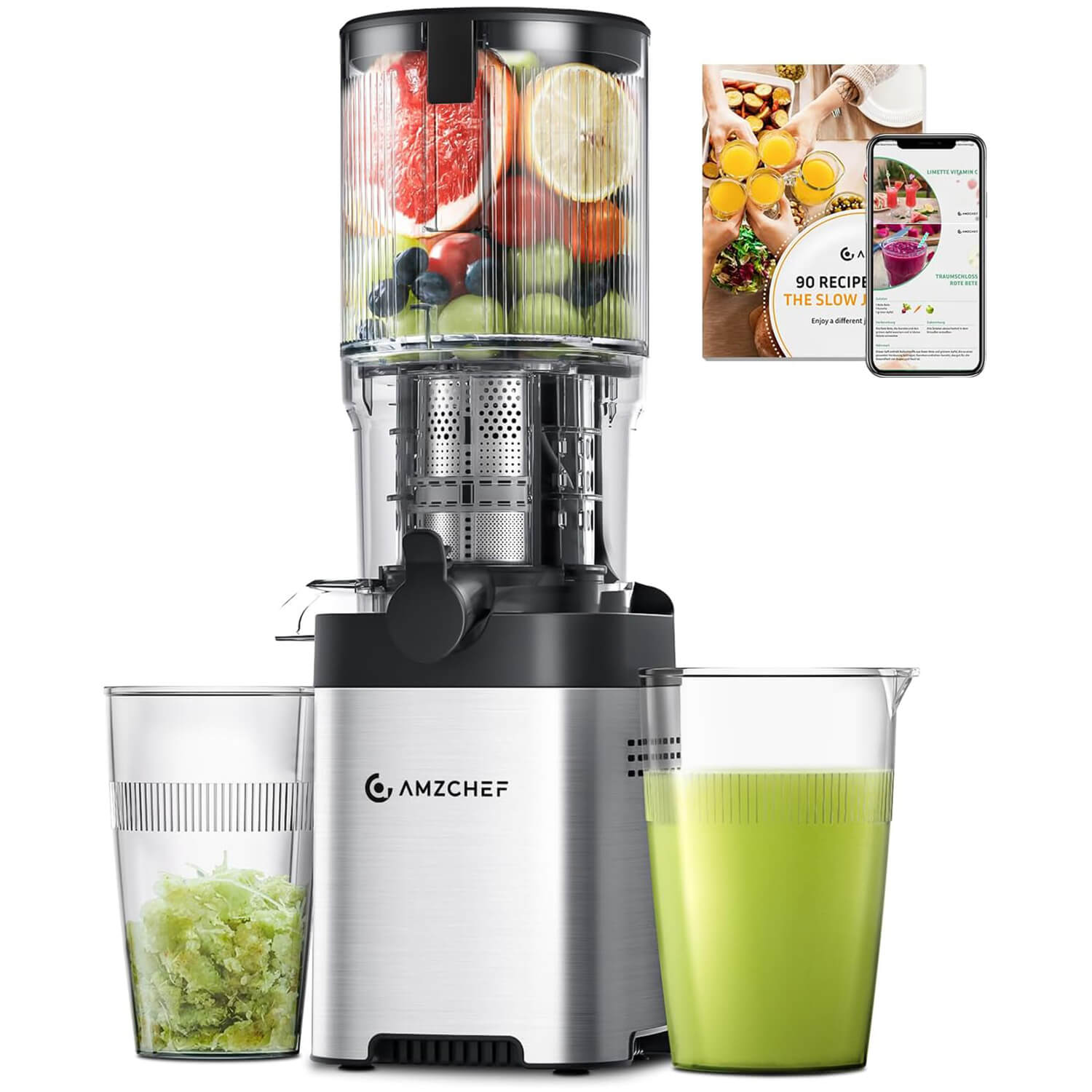
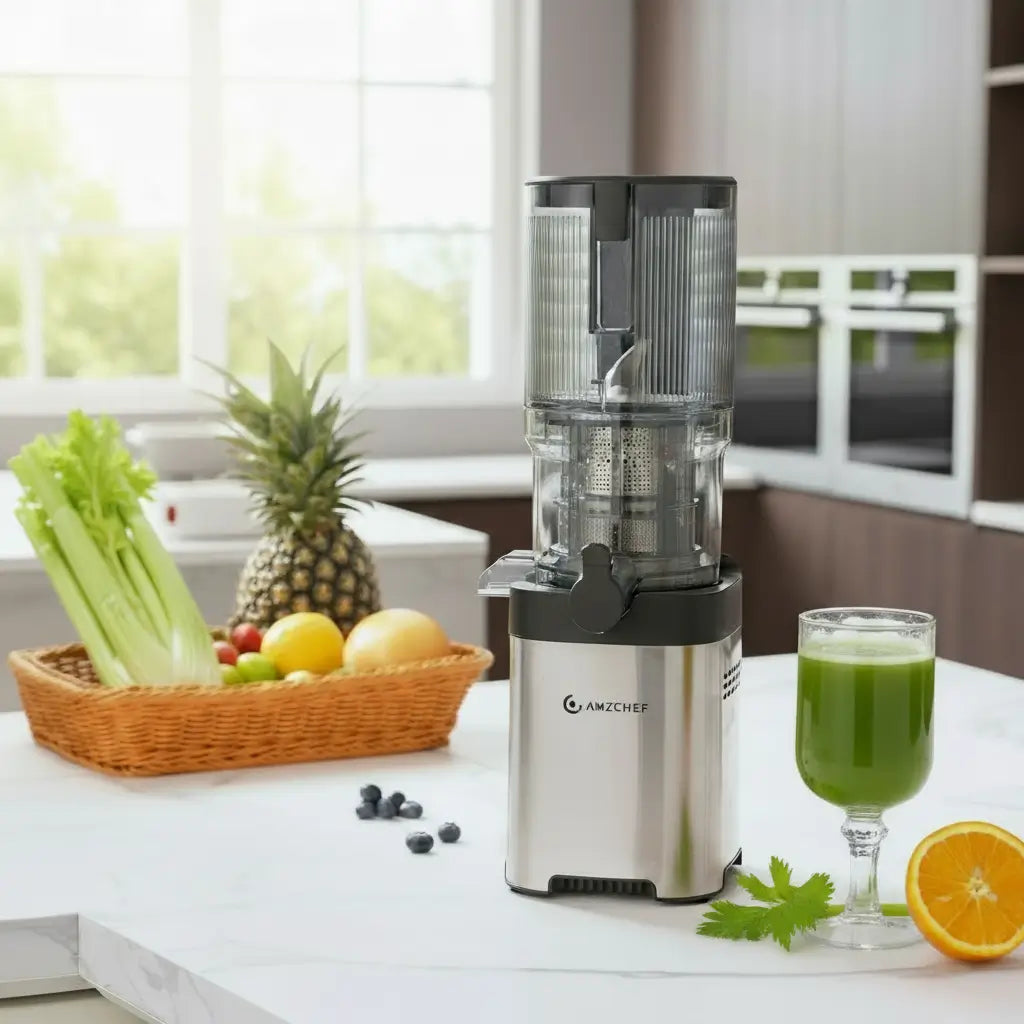
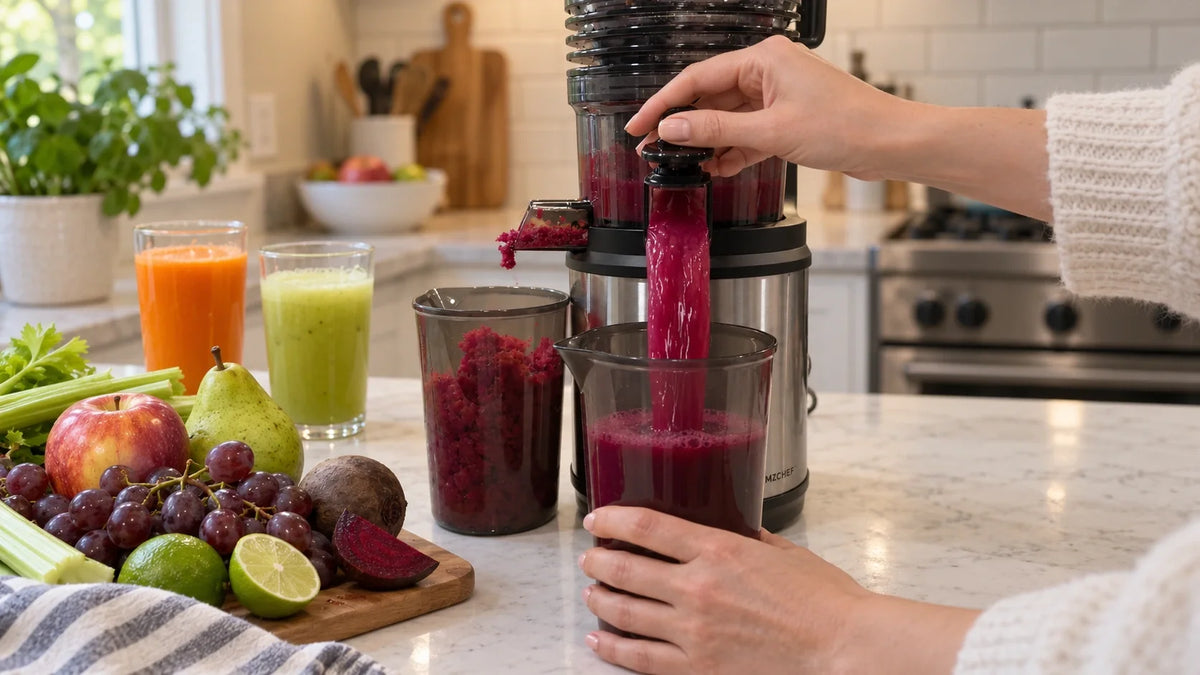
The AMZCHEF 6-Inch Family Cold Press Juicer pairs a 6-inch chute with a 2,000 mL container, a 250W motor, and slow 55 RPM extraction. The larger format is useful when making several servings, but ingredients should still be trimmed and loaded according to the manual.

1. Apple Carrot Ginger Juice
This is the easiest place to start. Apple softens the earthy carrot flavor, while ginger adds warmth without requiring syrup or added sugar.
Ingredients
- 2 medium sweet apples, cored
- 3 medium carrots, scrubbed and trimmed
- 1/2 to 1 inch fresh ginger
- 1/2 lemon, peeled, optional
Directions
- Cut the apples and carrots to fit the feed chute.
- Juice the apples and carrots in alternating pieces.
- Add the ginger near the end so its flavor spreads through the juice.
- Add the peeled lemon if you want a brighter finish.
- Stir and serve immediately.

Adjustment tip: Use less ginger for a mild morning juice. For a warmer fall flavor, stir in a very small pinch of ground cinnamon after juicing. Do not put ground spices into the juicer.
2. Pear Cucumber Mint Juice
Ripe pears can taste heavy on their own. Cucumber keeps the drink light, and mint adds a clean aroma.
Ingredients
- 2 ripe pears, cored
- 1/2 large cucumber
- 6 to 8 fresh mint leaves
- 1/2 lemon, peeled
Directions
- Juice one pear, followed by the cucumber and the second pear.
- Feed the mint between pieces of pear so the leaves move through the auger.
- Finish with the peeled lemon.
- Stir well and pour over ice if desired.

Juicing tip: If the pears are very soft, chill them first and alternate each piece with cucumber. This helps the mixture move through the juicer more cleanly.
3. Beet Apple Orange Juice
Beet gives this juice a deep red color and an earthy taste. Apple and orange make the flavor more approachable.
Ingredients
- 1 small raw beet, scrubbed and trimmed
- 2 medium apples, cored
- 1 orange, peeled and seeded
Directions
- Cut the beet into pieces that fit your machine.
- Juice one apple, then alternate the beet with the remaining apple.
- Add the peeled orange last.
- Stir before serving because beet juice can settle.

Adjustment tip: Start with half a beet if you are new to its flavor. Beet pigment can stain porous cutting boards, towels, and light-colored surfaces, so wipe spills promptly.
4. Cranberry Apple Orange Juice
Fresh cranberries are intensely tart and produce less liquid than apples. Treat them as a flavor ingredient rather than the main base.
Ingredients
- 1 cup fresh cranberries
- 3 medium apples, cored
- 1 orange, peeled and seeded
Directions
- Begin with several apple pieces.
- Add the cranberries a small handful at a time, alternating them with apple.
- Juice the orange last.
- Stir and taste. Add more apple juice if the drink is too tart.

Juicing tip: Frozen cranberries should be thawed in the refrigerator before juicing. Do not force a solid frozen block into the feed chute.
5. Carrot Pear Celery Juice
Pear rounds out the sharper flavor of celery, while carrot gives the drink a fuller texture.
Ingredients
- 3 medium carrots, scrubbed and trimmed
- 2 ripe but firm pears, cored
- 2 celery stalks, trimmed
- 1/2 lemon, peeled, optional
Directions
- Cut long celery stalks into shorter sections if required by your juicer.
- Alternate carrot, pear, and celery to maintain steady flow.
- Add the peeled lemon at the end.
- Stir and serve cold.

Juicing tip: Fibrous celery strings can collect around some augers. Feed celery gradually and use the reverse function only as directed by the manual.
6. Apple Fennel Lemon Juice
Fennel has a light anise aroma that pairs well with crisp apple. A small amount is enough.
Ingredients
- 2 medium apples, cored
- 1/2 small fennel bulb, trimmed
- 1/2 cucumber
- 1/2 lemon, peeled
Directions
- Cut the fennel into narrow pieces and separate any tightly packed layers.
- Juice the apple, fennel, and cucumber in alternating pieces.
- Finish with the peeled lemon.
- Stir and taste before adding more fennel.

Serving tip: Save a few fennel fronds for garnish, but keep large amounts of fine herbs out of the machine unless the manual says they are suitable.
7. Grape Apple Lime Juice
Red or purple grapes give this juice a harvest-season flavor and color. Lime prevents the drink from becoming overly sweet.
Ingredients
- 2 cups seedless red or purple grapes, removed from the stems
- 1 medium tart apple, cored
- 1/2 lime, peeled
- 1/2 cucumber, optional
Directions
- Juice several apple pieces first.
- Add the grapes gradually rather than loading them all at once.
- Alternate the remaining apple with grapes and optional cucumber.
- Finish with the peeled lime and stir.

Juicing tip: Very soft grapes can create more foam. Chill the fruit and add a firm apple or cucumber between handfuls to keep the flow steady.
How to Adjust Any Fall Juice Recipe
- If the juice is too sweet, add cucumber, celery, or a small amount of peeled lemon.
- If it is too tart, add half an apple or pear.
- If it tastes too earthy, reduce the beet, carrot, or fennel in the next batch.
- If ginger dominates, dilute the juice with cucumber rather than adding sugar.
- If the texture is too pulpy, check that the filter is seated correctly and clean it before the next batch.
Change one ingredient at a time. Small adjustments make it easier to learn which balance you prefer.
Storing Fresh Juice Safely
Fresh homemade juice is unpasteurized. Drink it soon after making it for the best flavor. If you are not serving it immediately, transfer it to a clean covered container and refrigerate promptly at 40°F or below. Do not leave it at room temperature for more than two hours, or more than one hour when the temperature is above 90°F.
Separation is normal. Stir or shake refrigerated juice before serving. Discard it if the smell, color, or texture seems unusual. Wash the filter and other food-contact parts as soon as you finish so pulp does not dry in the mesh.
Ways to Use the Leftover Pulp
Carrot and apple pulp can be stirred into oatmeal, quick-bread batter, muffins, or pancakes. Beet pulp can add color to vegetable patties or crackers. Keep pulp refrigerated in a covered container and use it promptly, or freeze small portions for later cooking.
Avoid using pulp that contains large amounts of citrus peel, tough stems, or ingredients with an overpowering flavor.
Frequently Asked Questions
Do I need to peel apples and pears before juicing?
Usually not. Rinse them well, remove damaged areas, and cut away the core. Peel the fruit if you dislike the skin's flavor or if your juicer manual recommends it.
Can I make these recipes without a cold press juicer?
Yes. A centrifugal juicer can use the same ingredient combinations, although the texture, foam, and yield may differ. A blender requires added liquid and straining, so the result will be closer to a blended drink.
Can I double the recipes?
Yes, provided you stay within the machine's capacity and operating-time limits. Empty the pulp container when needed and allow the machine to rest according to its manual.
Why should citrus peel be removed?
Thick citrus peel and white pith can make juice unpleasantly bitter. Peel oranges, lemons, and limes, while leaving a small amount of pith if you prefer a sharper finish.
Which recipe is best for beginners?
Apple carrot ginger is the most forgiving. Begin with a small piece of ginger and add lemon only after tasting the first version.
Fall juice does not need a long ingredient list. Start with apples or pears, add one vegetable, and finish with a small amount of acidity or spice. Once that balance tastes right, seasonal produce becomes easy to mix without wasting a full batch.