

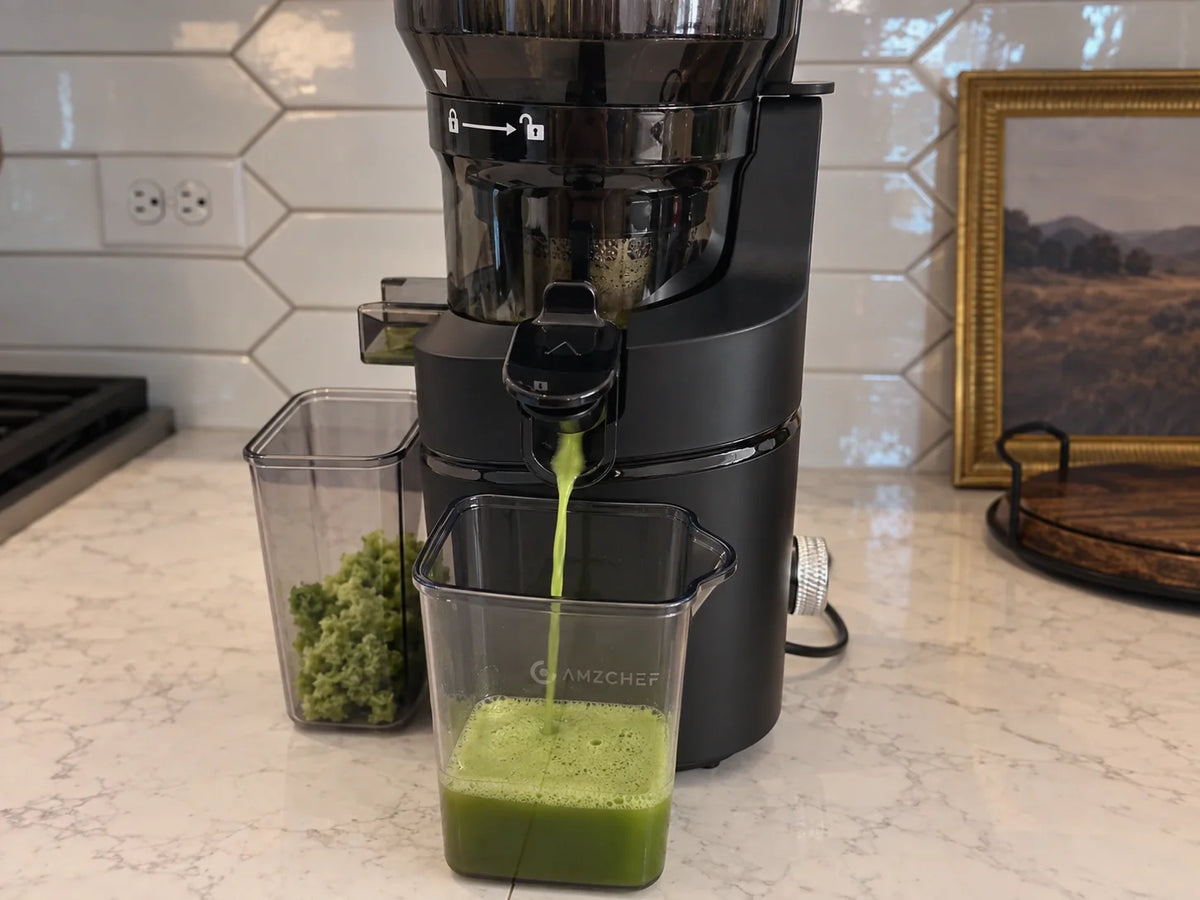
Green juice often tastes bitter when a recipe uses too many dark greens and not enough water-rich produce. A beginner-friendly blend should taste fresh first. Spinach, kale, or romaine can sit in the background while cucumber, apple, pear, pineapple, lemon, or mint shape the main flavor.
These five recipes use ordinary produce and clear proportions. Begin with the mildest recipe, then reduce the fruit gradually if you want a more vegetable-forward drink.
The Beginner Green Juice Formula
A reliable first blend uses four parts.
This formula is meant for flavor. It is not a nutrition target. Use less ginger and lemon than you think you need because both become stronger once concentrated.
Choosing Greens That Do Not Taste Too Bitter
Spinach is the easiest first choice because it is mild and soft. Romaine adds a fresh, watery flavor with very little bitterness. Kale tastes more assertive, especially when the leaves are large or mature, so begin with one or two leaves.
Parsley and other herbs are best used as accents. A full bunch can dominate a beginner recipe. Mint is gentler, but six to eight leaves are usually enough for one batch.
Wash greens carefully under running water, remove wilted or damaged leaves, and rinse between folds where dirt can collect. Drying is optional for juicing, but excess wash water can dilute the recipe.

1. Apple Cucumber Spinach Juice
This mild blend is the best starting point for someone who thinks green juice always tastes grassy.
Ingredients
- 1 large cucumber
- 2 medium apples
- 2 loose cups baby spinach
- 1/2 lemon
Directions
- Cut the cucumber and apples as required by your juicer, if necessary. With a 6.5-inch feed chute juicer, just drop them in without cutting.
- Juice several cucumber or apple pieces first.
- Fold the spinach into loose bundles and feed it between firm produce.
- Finish with the peeled lemon.
- Stir and taste before adding more lemon.

Adjustment tip: Use a tart apple for a brighter drink or a sweet apple for a softer introduction to spinach.
2. Pineapple Romaine Celery Juice
Pineapple gives this recipe a tropical flavor, while romaine and celery keep it light rather than dessert-sweet.
Ingredients
- 1 cup fresh pineapple chunks, rind and core removed
- 4 large romaine leaves
- 2 celery stalks
- 1/2 large cucumber
Directions
- Begin with cucumber or celery.
- Fold each romaine leaf and feed it between firmer pieces.
- Alternate pineapple with the remaining celery and cucumber.
- Stir well and serve cold.

Adjustment tip: If the pineapple is very ripe, add more cucumber. If the celery flavor is too strong, reduce it to one stalk in the next batch.
3. Pear Kale Lemon Juice
Ripe pear softens kale's stronger flavor. Lemon keeps the finish clean.
Ingredients
- 2 ripe but firm pears, cored
- 2 medium kale leaves
- 1/2 large cucumber
- 1/2 lemon, peeled
Directions
- Remove the thickest lower section of each kale stem.
- Juice pear and cucumber pieces first.
- Roll the kale loosely and feed it between pieces of pear.
- Add the peeled lemon last.
- Stir and taste.

Beginner tip: Start with one kale leaf if you are sensitive to bitter flavors. Baby kale is usually milder than large mature leaves.
4. Green Grape Cucumber Mint Juice
This recipe is crisp and aromatic. It works well for beginners who want only a small amount of leafy greens.
Ingredients
- 2 cups seedless green grapes, removed from the stems
- 1 large cucumber
- 1 loose cup baby spinach
- 6 to 8 mint leaves
- 1/2 lime, peeled, optional
Directions
- Begin with cucumber pieces.
- Add the grapes gradually, alternating them with spinach and cucumber.
- Feed the mint between firm pieces.
- Finish with the peeled lime if desired.
- Stir before serving.

Adjustment tip: Grapes are naturally sweet, so lime helps create a cleaner finish. Add it gradually rather than juicing a whole lime at once.
5. Apple Celery Spinach Ginger Juice
This recipe has a more familiar vegetable-juice flavor but still uses apple to control bitterness.
Ingredients
- 2 medium apples, cored
- 3 celery stalks
- 1/2 large cucumber
- 1 loose cup baby spinach
- 1/2 inch fresh ginger
Directions
- Cut celery into shorter sections if required by the manual.
- Alternate apple, celery, and cucumber.
- Feed the spinach between firm pieces.
- Add the ginger near the end.
- Stir and serve immediately.

Adjustment tip: For a milder version, use two celery stalks and a smaller slice of ginger. For a less sweet version, replace half an apple with more cucumber.
A Large Feed Chute Still Needs Good Loading
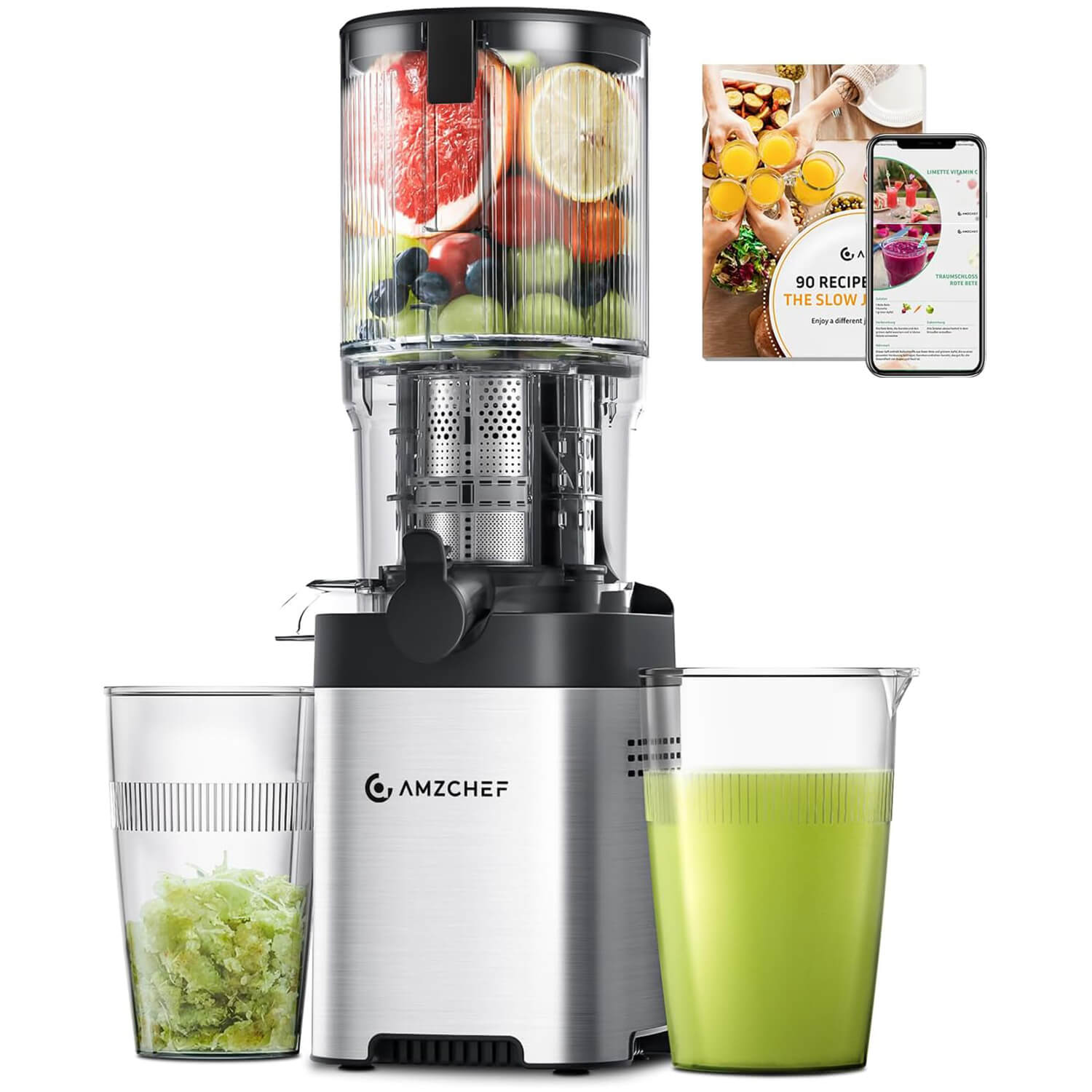
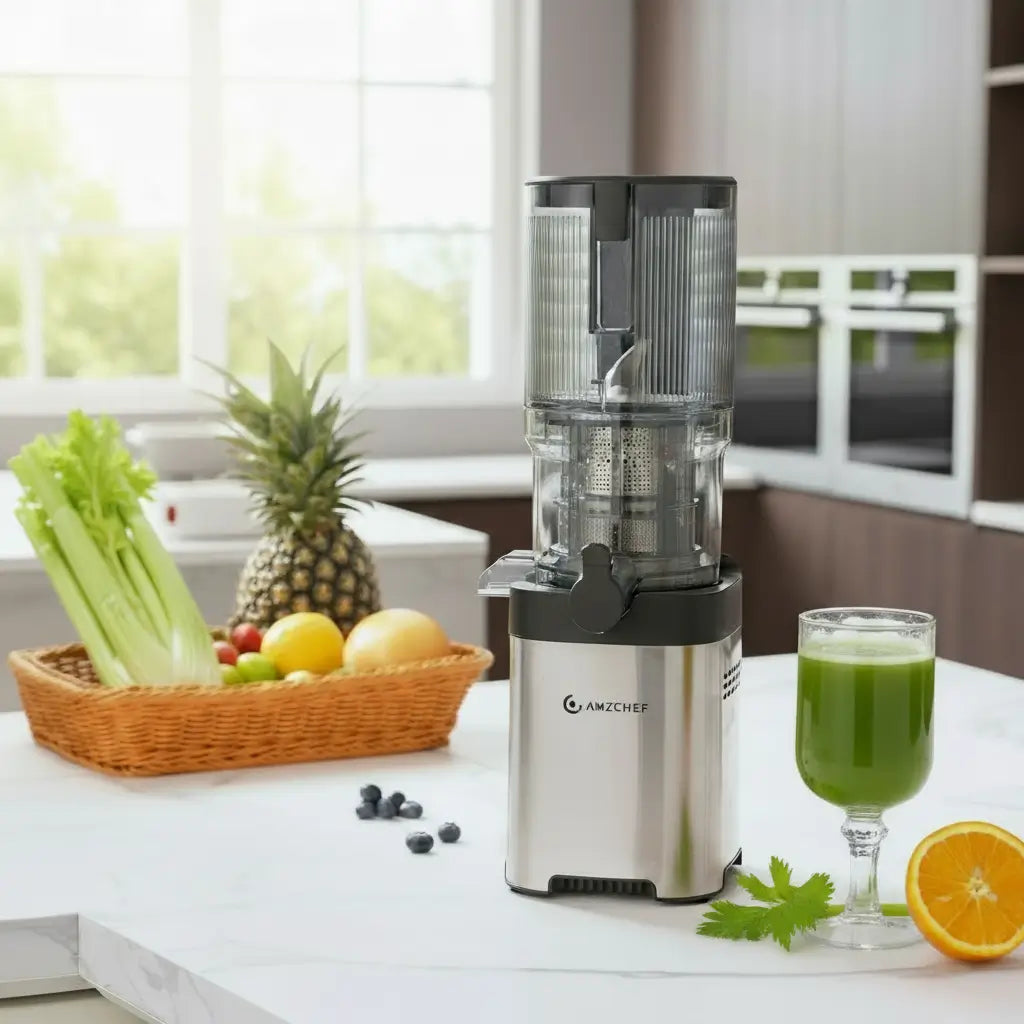
The AMZCHEF 6.5-Inch Whole-Fruit Cold Press Juicer uses a 250W motor, a slow 60 RPM juicing speed, and a triple-strainer system. A wide chute reduces repeated cutting, but good loading order still matters for green juice.
Alternate soft leaves with firm cucumber, apple, pear, carrot, or celery. Do not pack a dense ball of spinach or kale into the chute. Let the auger pull each portion through before adding more. If the flow slows, stop and follow the manual's reverse-function instructions rather than forcing produce downward.
Green Juice Troubleshooting Chart
Change one variable per batch. If you change the greens, fruit, and citrus together, it is harder to identify what improved the flavor.
How to Make Green Juice Less Sweet Over Time
Do not remove all the fruit from the second batch. Reduce it gradually while adding cucumber, celery, or romaine to maintain enough liquid.
For example, begin with two apples in the apple cucumber spinach recipe. The next time, use one and a half apples. If that still tastes balanced, try one apple and add more cucumber. This approach is more likely to produce a drink you will finish instead of a bitter batch that goes to waste.
Cleaning After Leafy Greens and Celery
Leaf fibers dry quickly in a fine filter. Disassemble the food-contact parts as soon as the batch is finished, rinse away loose pulp, and clean the mesh with the supplied brush. Check the pulp outlet and the area around the auger for celery strings or folded greens.
Follow the product manual for washing instructions. Do not assume removable parts are dishwasher-safe. Allow every part to dry fully before reassembly or storage.
Storing Fresh Green Juice
Fresh homemade green juice is unpasteurized. Serve it soon after juicing for the best flavor and color. Refrigerate any remainder promptly in a clean covered container at 40°F or below. Do not leave it at room temperature for more than two hours, or more than one hour when the temperature is above 90°F.
Some separation and color change are normal. Stir or shake before serving, and discard juice that looks or smells questionable.
Frequently Asked Questions
What is the mildest green for juice?
Baby spinach is usually the easiest starting point. Romaine is another mild option when you want more liquid and a fresh lettuce flavor.
Do I need to remove kale stems?
Remove the thick, tough lower section if your machine struggles with dense fibers. Tender upper stems can usually be cut into short pieces and alternated with firm produce, subject to the manual.
Should lemons and limes be peeled?
Yes. Thick peel and excess white pith can make the juice bitter. Remove the peel and seeds before juicing.
Can frozen fruit go into a slow juicer?
Use fresh or refrigerator-thawed produce unless the manual specifically permits frozen ingredients. Hard frozen pieces can strain the machine and may block the feed path.
Why did my spinach produce so little juice?
Leafy greens contain less free liquid than cucumber, apple, or pear. Bundle leaves loosely and feed them between firm, water-rich ingredients so the auger can press them more effectively.
Can I prepare the ingredients the night before?
Yes. Wash and cut them, place them in clean covered containers, and refrigerate. Keep cut produce at 40°F or below and juice it as soon as practical.
The easiest green juice is built around cucumber and a familiar fruit, with greens playing a smaller role. Once the flavor works, reduce the fruit gradually or try a stronger leaf. A good recipe is the one you can repeat without forcing yourself to finish it.